
Choosing a Sauna the Whole Household Will Use

The sauna your whole household will actually use is sized for your largest realistic group, placed somewhere everyone can access easily, and set at a heat level that does not exclude the most heat-sensitive person in the home. Most families land on a four to six person cabin, often infrared or a moderate-temperature traditional unit, since it accommodates both solo sessions and shared ones without feeling wasted either way.
1. Size it for your busiest realistic session, not the average one
It is tempting to buy the smallest cabin that fits your typical use case, one or two people on a weeknight. But a household sauna gets used differently on weekends, after a workout with a friend, or during a holiday visit. A two-person cabin feels tight the first time three people want in. Four to six person cabins cost more upfront but rarely feel wasted, since they work fine for one person and still handle a full house when needed. Measure your actual bench space needs, not just headcount, since people need room to lie down or stretch out, not just sit shoulder to shoulder.
2. Decide between indoor and outdoor placement early
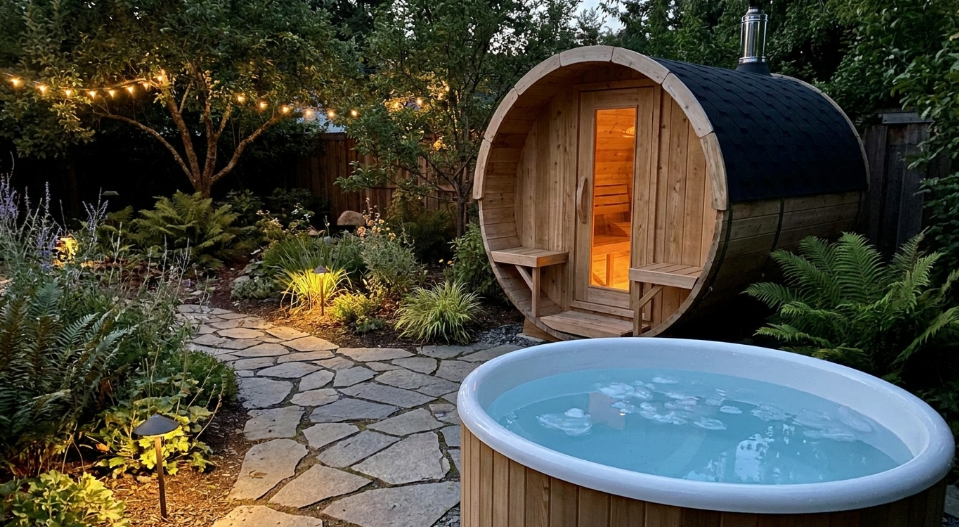
Outdoor saunas free up interior space and vent naturally, which matters for households without a spare room to dedicate. They do need a solid, well-drained base and weatherproof construction, and in cold climates, walking outside in a towel between rounds is part of the deal. Indoor saunas are more convenient in bad weather and accessible for anyone who has mobility concerns about stairs or a yard, but they need real ventilation planning and floor protection, since moisture from steam and sweat will find its way into surrounding drywall and flooring if the room is not built for it.
3. Pick a heat style that will not exclude anyone in the house
Traditional Finnish-style heat, often 170°F to 195°F, delivers an intense, fast session that some household members love and others find overwhelming, especially kids, older adults, or anyone new to sauna use. Infrared cabins run at a lower ambient temperature, commonly 120°F to 140°F, while still producing a real sweat, and tend to be the more universally comfortable choice for a household with a wide age range or mixed tolerance. If your household genuinely wants the intense traditional experience, that is a fine choice too, but be honest about whether everyone will actually use a sauna that feels too hot for them.
4. Match heater size to how often the whole family will use it
A heater sized for occasional solo use struggles when three or four people are using the cabin back to back through an evening, since it has to recover heat between sessions. Households planning on regular multi-person use should size the heater slightly larger than the bare minimum for the cabin’s square footage, so recovery time between rounds stays short. This is a case where it is worth asking a retailer directly what heater size they recommend for your specific cabin footprint and household size, rather than assuming the base model is enough.
5. Think about who needs easy access
Door width, step height, and bench layout matter more once you are designing for a household rather than one person. A single higher step or narrow door that works fine for one adult can become a real barrier for a grandparent or a young kid. Lower, wider benches and a step-free or low-step entry make a shared family sauna genuinely usable by everyone, not just the most able-bodied person in the house.
6. Set a household budget that covers purchase and running cost together
A family that plans to use a sauna several times a week should budget for both the upfront cost, typically $3,000 to $10,000 depending on size and heater type, and the ongoing electricity cost, usually $20 to $50 a month for a well-used household unit. Before settling on a size, it helps to view current pricing across a few cabin sizes side by side, since the jump from a two-person to a six-person unit is not always as large as people assume once delivery and site prep are factored in equally.
7. Assign upkeep instead of hoping it happens
Household saunas that get neglected are usually not neglected because of the sauna itself, they are neglected because no one owns basic upkeep. Wiping down benches after use, cracking the door to air out the cabin, and periodically checking heater rocks are small tasks, but they fall through the cracks when everyone assumes someone else is handling it. Households that keep their sauna in good shape long term tend to be the ones that split these habits explicitly rather than leaving them to whoever happens to notice.
Is there evidence this is worth doing as a family habit?
A Mayo Clinic Proceedings review of the sauna research found regular use associated with a range of cardiovascular and general wellness outcomes across long-term users, and a related 2023 Mayo Clinic Proceedings paper looked at how sauna use interacts with other lifestyle factors like exercise and diet. Both are association findings from cohort data, not controlled proof that sauna sessions alone improve health, and they mostly reflect adult, largely Finnish study populations rather than mixed-age households. Still, they are part of why many families treat regular sauna time as a shared habit worth building into the week rather than an occasional indulgence.
Frequently Asked Questions
What size sauna is right for a family of four?
A four to six person cabin gives enough room for two adults and one or two kids to sit comfortably without crowding, and still works fine when only one person is using it. Sizing for your largest realistic group, not your average one, avoids a cramped fit later.
Is infrared or traditional heat better for a household with mixed preferences?
Neither is objectively better. Infrared runs at a lower, gentler temperature that beginners and heat-sensitive household members often prefer, while traditional heat delivers a more intense, faster sweat that experienced users tend to favor. Some families end up choosing infrared as the more universally tolerable option.
Should a household sauna go indoors or outdoors?
Outdoor units free up interior square footage and vent heat and moisture naturally, but need weatherproofing and a solid base. Indoor units are more convenient in bad weather but require good ventilation and floor moisture protection to avoid damaging surrounding rooms.
How do you budget for a sauna the whole family will use regularly?
Add the cabin price, delivery, site prep, and any electrical work for the upfront total, then plan on $20 to $50 a month in electricity for a family using it several times a week. Heavier household use justifies spending more upfront on a durable heater and wood.
Who should maintain a family sauna?
One household member usually ends up as the default caretaker, checking rocks, wiping down benches, and watching for wood wear. Splitting basic after-use habits, like wiping benches and cracking the door to air out, across everyone who uses it keeps the workload from falling on one person.
References
- Cardiovascular and Other Health Benefits of Sauna Bathing: A Review of the Evidence, Mayo Clinic Proceedings, 2018
- Does the Combination of Finnish Sauna Bathing and Other Lifestyle Factors Confer Additional Health Benefits? A Review of the Evidence, Mayo Clinic Proceedings, 2023
- Clinical Effects of Regular Dry Sauna Bathing: A Systematic Review, Evidence-Based Complementary and Alternative Medicine, 2018